

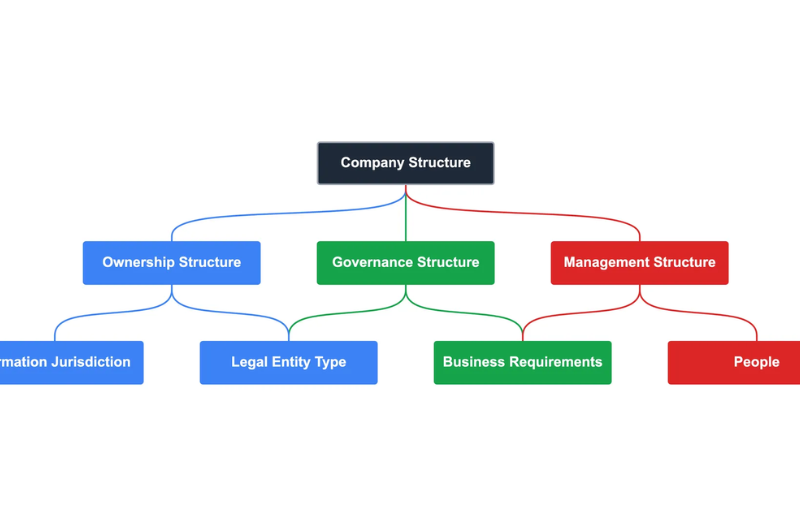
An effective organizational structure plays a key role in ensuring the efficient and high-quality execution of company operations. Through a well-defined structure, departments, divisions, and units are established, enabling clear classification and management of operational processes.
Development of the Organizational Structure
Before establishing an organizational structure, it is mandatory to prepare the Company Organizational Regulation. This legal document defines the structure’s form and type, rights and responsibilities, obligations, authorities, and other essential elements.
Once approved by the company’s legal representative (Director), the regulation enters into legal force. Based on the approved regulation, the organizational structure is officially created in the Labor and Employment Subsystem (ƏMAS) by a director’s order.
The creation, modification, or liquidation of the company’s organizational structure is legally valid only by order of the legal representative.
Key Elements of the Structure
An organizational structure may consist of a main structure and sub-structures such as departments, divisions, and units. The system established for each structural unit ensures:
-
Timely feedback
-
Monitoring of work progress
-
Efficient and prompt decision-making
-
Employee motivation
-
Identification of training and guidance needs
-
Performance management
-
Rapid resolution of emerging issues
-
Strengthened internal control
Role of Staffing Positions
Staffing positions within the organizational structure enable:
-
Proper distribution of operational responsibilities
-
Measurement of both quantitative and qualitative performance indicators
-
Increased efficiency
-
Balanced workload management
-
Clear understanding of roles and responsibilities by employees
Organizational Structure and Corporate Culture
The existence of an organizational structure plays a fundamental role in shaping corporate culture and significantly influences employee behavior. A company with a clear structure and strong corporate culture carries organizational credibility, ensuring proper representation to employees, business partners, and competitors.
As a result, employees clearly understand their responsibilities and perform their duties with commitment and motivation. This leads to higher performance, stronger corporate values, and a more sustainable work culture.
NFS Audit Consulting provides professional support in the creation and management of organizational structures, helping companies build efficient, compliant, and well-organized operations.
Let's discuss with you.
Accounting
Bookkeeping
Financial Accounting
Management Accounting
Cost Accounting
Auditing
Balance Sheet
Income Statement (Profit and Loss Statement)
Cash Flow Statement
Statement of Equity
Financial Reports
Assets
Liabilities
Equity
Current Assets
Fixed Assets
Intangible Assets
Current Liabilities
Long-term Liabilities
Revenue
Sales
Income
Expenses
Operating Expenses
Gross Profit
Net Profit
Loss
Journal
Ledger
Trial Balance
Debit
Credit
Accrual Accounting
Cash Basis Accounting
Depreciation
Amortization
Tax
VAT (Value Added Tax)
Income Tax
Tax Return
Compliance
Budget
Forecast
Financial Analysis
Internal Control
Inventory
Accounts Receivable
Accounts Payable
Financial Reporting
International Financial Reporting Standards (IFRS)
Generally Accepted Accounting Principles (GAAP)
Consolidated Financial Statements
Fair Value
Impairment
Cost Allocation
Variable Cost
Fixed Cost
Break-even Point
Marginal Cost
Standard Costing
Activity-Based Costing (ABC)
Capital
Share Capital
Retained Earnings
Dividends
Shareholder
Investment
Merger
Acquisition
Invoice
Receipt
Payroll
Wages
Salaries
Accrued Expenses
Prepaid Expenses
Unearned Revenue
Interest
Loan
Overdraft
Credit Risk
Liquidity
Solvency
Internal Audit
External Audit
Audit Report
Fraud
Risk Management
Financial Ratios
Liquidity Ratio
Profitability Ratio
Return on Assets (ROA)
Return on Equity (ROE)
Source Documents
Voucher
Supporting Documents
Chart of Accounts
General Journal
Subsidiary Ledger
Going Concern
Matching Principle
Consistency Principle
Materiality
Conservatism
Substance over Form
Inventory Valuation
FIFO (First In
First Out)
LIFO (Last In
First Out)
Weighted Average Cost
Stocktaking
Cost of Goods Sold (COGS)
Straight-line Method
Declining Balance Method
Useful Life
Residual Value
Capital Expenditure
Operating Expenditure
Petty Cash
Bank Reconciliation
Cash Receipts
Cash Payments
Electronic Payment
Gross Salary
Net Salary
Payroll Tax
Employee Benefits
Social Security Contributions
Statutory Requirements
Regulatory Framework
Financial Disclosure
Compliance Audit
Measurement Basis
Historical Cost
Present Value
Net Realizable Value
Valuation Allowance
Revenue Recognition
Expense Recognition
Accrued Revenue
Deferred Revenue
Matching Concept
Capitalization
Accounting Services
Bookkeeping Services
Financial Accounting Services
Management Accounting Services
Outsourced Accounting
Virtual Accounting
Financial Reporting Baku
Management Accounting Services Baku
Outsourced Accounting Baku
Virtual Accounting Baku
Financial Reporting Baku sale
Preparation of Financial Statements
Monthly Reporting
Annual Reporting
Management Reports
Tax Accounting
Tax Planning
Tax Compliance
VAT Accounting
Tax Filing
Tax Advisory
Payroll Accounting
Payroll Processing
Salary Calculation
Payroll Tax Reporting
Employee Compensation
Accounts Receivable Management
Accounts Payable Management
Cash Flow Management
Bank Reconciliation Services
Accounting Advisory
Financial Consulting
Business Advisory Services
Financial Analysis Services
Audit Support Services
Internal Control Review
Financial Due Diligence
Accounting Software
Cloud Accounting
ERP Systems
Financial Data Management
Are you ready for cooperation?
[email protected]